The basics
Morgan dollars were struck from 1878 to 1904 and again in 1921. Each is 90 percent silver, weighs 26.73 grams and holds 0.7734 troy ounces of pure silver. The design is named for George T. Morgan, the Mint engraver who created it.
Finding the mint mark
Turn the coin over. The mint mark sits just above the letters DO in DOLLAR, below the wreath. No mark means Philadelphia. CC is Carson City, O is New Orleans, S is San Francisco and D is Denver, which struck Morgans only in 1921.
Dates that matter
Carson City struck Morgans from 1878 to 1893, and every CC Morgan carries a premium. The 1893-S is the best known rarity of the series. The 1921 Morgan is the most common date, because the Mint struck millions that year.
- Common dates sell a bit above silver in worn condition
- Uncirculated common dates bring more
- Scarce dates and mint marks can bring many times melt
- Prooflike coins with mirror fields carry extra premiums
Condition and cleaning
Look at Liberty's cheek and the hair above her ear. Wear shows there first. Uncirculated coins keep their mint luster, a soft glow that rolls across the surface as you tilt the coin.
Cleaning hurts the price. Polished or dipped coins look bright but sell for less. Toning, even dark toning, is better left alone.
Rolls and bags
Families often kept Morgans in bank rolls or cloth bags. Leave them that way. We sort the dates during the appointment and point out any coin worth more than its neighbors.
Quick answers
Are Peace dollars worth the same as Morgans?
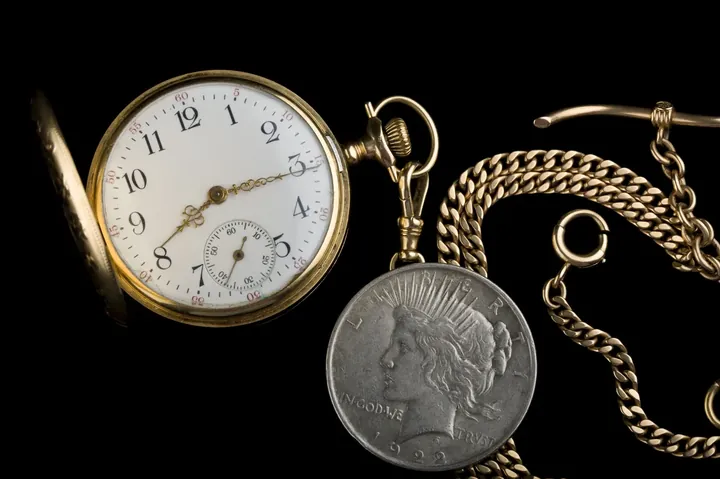
They hold the same amount of silver. Peace dollars were struck from 1921 to 1935, and collector prices depend on their own scarce dates.
Is a 1921 Morgan rare?
No. The 1921 is the most common Morgan. It still sells for its silver and a small premium.
Ready to sell? See silver dollars and silver with Houston Gold and Coin.